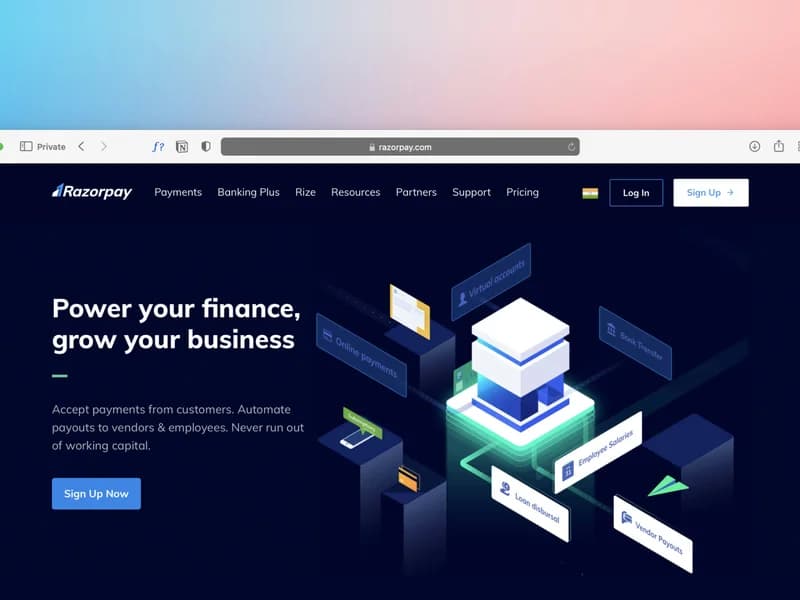
The average landing page converts at 2.4%. The top 25% convert at 5.3%. The best in class — the pages that agencies fight over to showcase — convert at 10-15%.
What separates them isn't beautiful design. It's an understanding of how human brains make decisions under uncertainty.
Principle 1: Loss Aversion Outweighs Gain Framing
Nobel laureate Daniel Kahneman proved that humans feel the pain of a loss 2.5x more intensely than the pleasure of an equivalent gain. Your CTA should frame value in terms of what prospects avoid losing, not what they gain.
Weak: "Get 20% more leads with our platform"
Strong: "Stop losing 20% of your leads to slow follow-up"
Principle 2: The Serial Position Effect
Memory research shows people best remember the first and last items in a sequence (primacy and recency effects). Apply this to your landing page:
- Above the fold: Your single most powerful differentiator
- Mid-page: Supporting evidence (testimonials, data, process)
- Above footer: Final CTA with your most compelling offer or risk reducer
Principle 3: Cognitive Load Kills Conversions
Every decision a visitor must make reduces the likelihood they make the decision you want. The best landing pages make the next step blindingly obvious and eliminate all other choices.
- One primary CTA per page (multiple CTAs reduce conversion by 24% per Unbounce research)
- Navigation removal: tested +20% conversion lift on average
- Form fields: every additional field costs 11% conversion rate
Principle 4: Social Proof Hierarchy
Not all social proof is equal. Here's the hierarchy by conversion impact (most to least):
- Identified case studies with named companies and specific results
- Video testimonials from recognized individuals in your industry
- Named text testimonials with photos and company names
- Review aggregates (G2, Clutch, Trustpilot scores)
- Company logos (the generic "trusted by" section)
- Anonymous testimonials (minimal impact)
Principle 5: The Zeigarnik Effect — Make Them Feel Started
People are more likely to complete tasks they've already begun. This is why multi-step forms outperform single long forms: asking for email first (an easy step) creates commitment to complete.
Apply this to your entire funnel: a free audit, a score, a quiz. Once they've invested time, completion rates soar.
The High-Converting Landing Page Formula
- Pain-led headline (what problem do you solve?)
- Specific outcome statement (what exact result can they expect?)
- Risk reducer (money-back, free trial, no-commitment)
- Social proof (case study with numbers)
- CTA (action verb + benefit + urgency)
At Web Wizard, our landing pages for Ahmedabad-based B2B clients routinely achieve 8-14% conversion rates using these principles. The science is settled — the application is the art.